I am a strong believer in the chill pill. The philosophy “you can’t stop the waves but you can learn to surf” has influenced me from a very young age, as well as the mantra “everything in moderation.” I find total conviction in any one belief, to be unnerving and dangerous. All the hatred and violence in this world arises from people being too sure that their idea is right and everyone else is wrong. This kind of extremism not only promotes hatred, but stunts the progress of mankind. If the church were less absolute in its belief in the bible, for example, Galileo’s legitimate observation that the earth moves around the sun could have been celebrated and applied rather than landing him under house arrest for the remainder of his life.
Throughout history, communities have come to believe in fallacies with unwavering certainty. As a result, good people have died and truth has been restrained. Perhaps it would be beneficial to drill into every human being a sense of insignificance- to teach them that the universe is big and they are small, and their knowledge is limited.
In relation to the size of the universe, and the time over which it has existed, all of humanity becomes immeasurably small. In the never ending expanse of the space-time continuum, your own lifespan is scarcely detectable. I think extremism is dangerous, and it comes from feelings of self-importance. The fact that we’re not so big and powerful, and that we can’t possibly know everything is humbling. To be humble is to be moderate, and to be moderate is to be peaceful and open to rational discussion.
One cannot achieve much in life, neither in the realm of professional success nor in that of personal fulfillment, without obtaining a sufficient amount of knowledge. Knowledge of math and science, of social interactions, of time management skills, and on and on. How can one obtain this knowledge? Everything we know we discover through experience, through trial and error. What an individual can learn however, is not limited to their own personal experience.
All the things I want to know, and need to know, I could not possibly learn from my own experiences. So what I can’t learn from my own experiences, I will gladly absorb from my parents. And what they cannot teach me, I will learn from my friends, and extended family, and my teachers at school.
But the knowledge of all the people I personally know, living in this current time, is still humbled by the enormous archive of knowledge available to me. For decades upon decades, the wisest words, and the most profound realizations, have been captured into text, or audibly recorded, or personified into art, music, or film. And thus, they have been preserved.
So I will eagerly read, hear, and observe as much as I can. With an open mind, I will pursue the immense collection of knowledge before me. And perhaps, I can start to understand something about this world and my place in it. The collaborative efforts of the entire human race is bestowed upon me. And I will accept it, as best I can. And standing high up on the shoulders of giants, perhaps I will see something new, that no one before me could see. And so, I will make my own contribution to this infinite collection of knowledge. And so, mankind will grow, and learn, and overcome its faults. And so, mankind will create peace and conquer the universe. With trial and error my friend, and with time.
The magnetic house of cards is a rather terrifying idea that has occupied my mind lately. It’s a metaphor, used to describe life today in America and much of the world.
Imagine living in a small, primitive village. A tribe. You are a tight knit group, maybe just a family or two. You hunt and gather your food. You move with the seasons, and abide by the weather. You develop skills and acquire knowledge that’s relevant to your survival, such as what plants are poisonous and what animals are dangerous. Living in this way is like one card, lying on the ground. It’s stable, and not very likely to change. A civilization can happily survive like this for many years.
Then comes the Egyptian empire, the Greek empire, the Roman empire, even the Mayan and the Incan empires here in the Americas. They build a house of cards several stories high. They develop farming techniques that enable them to produce food surplus. Now, one person can make enough food for two people. Without the burden of finding food, the second person can apply themselves to creating a better structure, or better clothing, or even to entertainment, and thus a great civilization emerges. Yet, sooner or later, a gust of wind moves in and the house of cards falls to the ground.
Image from: https://www.1stdibs.com
Now, imagine if you took your cards and put some metal coating on the top and bottom. You hook them up to a device so that you can flip a switch, and the cards will become magnetized. They stick to each other inseparably, and all of the sudden, you can build your house of cards up and up and up. It’s incredibly tall, and incredibly stable. At least as long as no one turns off the switch. That’s where we are currently living, in a humongous, magnetic house of cards. And it’s terrifying.
A little while ago, we had a massive snow storm here in Colorado. They had to shut down all the major roads, and even the Denver airport. We had about four days of this, and the grocery stores were empty! Think about what would happen if they had to shut down the roads and the airport for a month. It doesn’t take long to run out of food in your house and at the grocery store. What would you do? Could you walk outside your house and find your own food? I mean, that’s what happened in New Orleans when hurricane Katrina hit. They didn’t have any power or communication, the roads were flooded, the airports were flooded. People, here in modern, developed, America, didn’t have any food. People were stealing and killing, crime and chaos was everywhere, because people couldn’t feed themselves.
We go to school, and we go through life, and we develop the skills needed to survive in our society. We learn how to tie a tie, and how to work a television, and how to drive a car. Does a tie keep you warm? Without someone producing your electricity, a TV is just a plastic box. And without someone digging up and shipping out your fuel, a car is just a metal box. But at least a metal box still has some value, unlike most of the things we are producing. 100 years ago, all the innovation was around physical things like machines and tools. Now, most of our innovation goes into things like iphone apps, and facebook pages. These things are at the very top of the house of cards, and are incredibly dependent on a million other people, and completely worthless when the system falls apart.
Our society is changing rapidly, its growing into something more advanced and powerful then we could have ever imagined. We have acquired so much connectivity through the Internet, and our highways, airways, and trains, that you can live virtually anywhere, and virtually any way you want. You can eat fish even if you don’t live by water. You can ski, even if you live in the desert! Our world is amazingly advanced, and it gives us a great deal of power. It’s very exciting to think about all the things we can achieve, living the way we are. But at the same time, our lives are becoming less and less based on the natural design of this planet, and I think it’s important to realize that. We can’t let our lives be entirely run by numbers in a computer, or resources that we can’t acquire. Because sooner or later, one way or another, that switch will get flipped off. Maybe a storm, maybe a war, somehow it will happen. And we can’t simply let our towering house of cards fall to the ground.
You might know about Pandora.com– Internet radio. It’s a website where you enter a favorite song or artist and it starts playing music similar to the kind you like. You can rate a song with a thumbs-up or a thumbs-down so it better understands your taste in music, and you can have multiple stations that play different kinds of music. Pandora is free, but you can upgrade to Pandora1 to get higher music quality without the ads, for $36 a year. That’s like buying what, four albums? A year? It’s a steal! A little while ago the founder of Pandora, Tim Westergren, came to Denver to meet-up with Pandora users and discuss the company. My dad and I decided to go and see what he had to say. He started off talking about himself, and then the company; its history, where they are right now, and where they want to go in the future. The rest was Q&A, and open for discussion. There were maybe 300 people there, and I thought it was really cool. Here’s some of the stuff he talked about that you might not know about Pandora.
The guy who started it all, Tim Westergren, is a musician- a piano player. He was in a rock band that played smaller venues around the US for a while. He was serious about his music, and at some point decided that the rock band wasn’t enough. His next big career move was to compose music for movies. He would talk to the director about how they wanted the audience to feel, and created music accordingly. He found that he had skill in matching music to certain people and certain needs, and thus came an even greater ambition: to change the way people listen to music. To create Pandora.
Pandora is based around something they call the Music Genome Project. Every song on Pandora has been ranked on more than 400 different attributes giving it a kind of fingerprint, a gene. It gets ranked on things like melody, harmony, rhythm, instrumentation, orchestration, arrangement, lyrics, singing, and vocal harmonies. And it’s all done manually. It’s all done by people, employees that have studied music theory in a university, that come in every day, put on a set of headphones, and listen to and rank songs.
Pandora operates under the Digital Millennium Copyright Act. This limits some of the ways it can distribute music. For example, you can only play Pandora in the United States, Pandora can’t play a specific song on demand, and it can’t tell you what song is going to play next, (for concern that you’re going to record it). The Act gives Pandora the ability to play any artist on Pandora, the artist has no say in it.
I always thought that artists didn’t like Pandora, as people could listen to their music without buying their albums. But actually, Pandora is extremely helpful to artists in a few ways. Pandora pays an incredible amount of money to artists in royalties. In a year where they made $50,000, they payed $30,000 to artists in royalties. Radio doesn’t have to pay anything. What’s up with that?! Pandora also helps artists get discovered. It may play a song you’ve never heard before, and you really like. You can easily see who the artist is, and even read more about them. But more than that, Pandora can really help new bands because almost anyone can be on Pandora. To be on the radio, you generally need a contract with some big record label. To be on Pandora, all you need is to have your CD for sale on Amazon. You could record a CD in your own home studio, and as long it’s on Amazon, it could be played on Pandora.
The really cool thing about Pandora, is it finds music based solely on the characteristics of the music. It has no way to measure how popular a band is, where they’re from, what they look like, what genre of music they play, or how modern they are. Pandora doesn’t care who else listens to them, if it’s “cool” to listen to them. The only thing it recognizes is the music itself.
The designer of the Pandora website worked previously as a designer of interactive museum displays. Simple things where you were expected only to push a button or pull a lever. He carried that over to Pandora with the thumbs up thumbs down. The simplicity of the Pandora website makes it easy to use, friendly, and appealing to almost everyone.
Pandora went through a rough spot while they were starting up. They were struggling to get licenses and pay royalties, and with everything else involved with starting a company. As a result, for more than a year no one at Pandora got paid. They worked there just because they believed in it and wanted to make it happen. The business slowly came together. One day Tim summoned them in for a standard meeting, and astounded everyone by producing a pay check for all the time they had worked. Everyone had given up on ever getting paid, and this was a very nice surprise.
Pandora almost got shut down because the government was going to change laws around music streaming. Pandora sent out a note to all of their listeners basically saying ‘This is it guys. Pandora’s going away because the laws are changing. If you are against this, here is your local congressman’s contact information. You can contact them if you want, see if it helps anything.’ There was an overwhelming grass-roots response. The phones were ringing non-stop all day in every congressman’s office, pushing them until they finally decided not to change the laws.
It now has more than 60 million listeners, which they have gained without advertising. They have grown simply by word of mouth, and their policy to always listen to and talk to their customers. They have also been doing these meet-ups across the country. A big part of their growth is mobile, the Pandora app allows people to stream music on their phones, and even in their cars.
In Pandora’s future, they want to give artists the ability to log on and see who’s listening to their music; who’s ‘thumbs uping’ their songs, and who’s entering them as a station seed. They could see maps of where the most listeners are, helping them decide where to drive the tour bus. Then Pandora could notify listeners that their favorite band is coming to town. They are also considering trying to bring other types of radio into the music genome project, such as sports, weather, and comedy.
I’m a big fan of Pandora now. I think it’s one of the best ways to listen to and discover music. It’s a cool company with some cool people working there. Radio used to be one of the best ways, one of the only ways, to get you’re music out there. You could go to your local radio station, give them a CD, and hope they would play your songs. But now, there’s no such thing as local radio. It’s all owned by a few major radio companies, and they don’t play anything unless it’s already popular. Not to mention radio is constantly interrupted with commercials. It’s the man. And sometimes you gotta stick it to the man. Pandora is the best thing for artists and for listeners. My thumb is up to you Pandora. May you grow and thrive.
I’m all about balance, I think it’s the most important thing in a healthy and happy life. As soon as you get into extremes and only do one thing or only believe one thing, shutting the rest out, you no longer have an accurate perception of reality. If you don’t consider other things, and experiment with other things, you’ll never really know what’s true and what’s right. If you’ve never been sad you won’t really understand happiness, right? What I want to talk about right now is what I think is one of the most important things to balance in your life- Science and Religion.
I’m not particularly religious. I had a Bar Mitzvah, the Jewish coming of age, but since then I haven’t been all that active. I think I’m generally more influenced by science. I can learn about and understand the basics of evolution and gravity and space. We have fossils and telescopes, evidence to support all the things we are learning. Religion is often based on a book filled with stories about miracles, and a God that we can’t see. It seems easy to say that science is true and religion is not. But I don’t think that’s the answer. Some people don’t believe in science, only religion. They can understand the lifestyle their God has laid out for them. They know what they’re supposed to do and choose to block out the science that sometimes contradicts it. But I don’t think that’s the right answer either. Now you’re getting into extremes, away from that essential balance.
So what is the answer? I think that science provides us with an explanation of how and why things work the way they do, but not necessarily why it matters. It doesn’t necessarily give us the relevance, the inspiration, the hope. When you look strictly at science, you might find that you are just one out of billions of people, stuck to a little hunk of rock, floating in circles around a medium sized star, in the outskirts of a galaxy, in an insignificant fraction of the universe. Science can explain that. And it leaves you feeling very unimportant.
Religion is the hope. Religion tells you about your commitment to your God and your fellow man. Religion talks about miracles and beauty, and leaders and heroes. Most religions follow a book made up of stories. We don’t generally have evidence to back those stories up, we don’t know if they are true. But does it matter? I think the purpose of the stories, the purpose of religion, isn’t to educate you on what happened back then, but to inspire you. To give you an opportunity to learn from the mistakes and the successes of the characters in the stories. To take that into your own life. Religion teaches us morals. Science teaches us facts.
I don’t think you can rank either science or religion as more important than the other. Both bring essential things to the table. Both are necessary. And I think that finding a balance between the two of them, a balance between knowledge and wisdom, understanding and hope, is the only way you can live a healthy, happy, and balanced life.
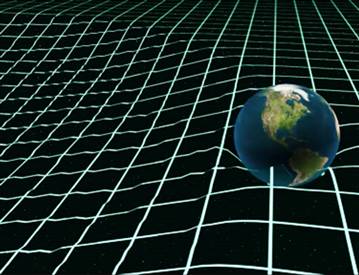 In relation to the size of the universe, and the time over which it has existed, all of humanity becomes immeasurably small. In the never ending expanse of the space-time continuum, your own lifespan is scarcely detectable. I think extremism is dangerous, and it comes from feelings of self-importance. The fact that we’re not so big and powerful, and that we can’t possibly know everything is humbling. To be humble is to be moderate, and to be moderate is to be peaceful and open to rational discussion.

 I’m not particularly religious. I had a Bar Mitzvah, the Jewish coming of age, but since then I haven’t been all that active. I think I’m generally more influenced by science. I can learn about and understand the basics of evolution and gravity and space. We have fossils and telescopes, evidence to support all the things we are learning. Religion is often based on a book filled with stories about miracles, and a God that we can’t see. It seems easy to say that science is true and religion is not. But I don’t think that’s the answer. Some people don’t believe in science, only religion. They can understand the lifestyle their God has laid out for them. They know what they’re supposed to do and choose to block out the science that sometimes contradicts it. But I don’t think that’s the right answer either. Now you’re getting into extremes, away from that essential balance.
 Religion is the hope. Religion tells you about your commitment to your God and your fellow man. Religion talks about miracles and beauty, and leaders and heroes. Most religions follow a book made up of stories. We don’t generally have evidence to back those stories up, we don’t know if they are true. But does it matter? I think the purpose of the stories, the purpose of religion, isn’t to educate you on what happened back then, but to inspire you. To give you an opportunity to learn from the mistakes and the successes of the characters in the stories. To take that into your own life. Religion teaches us morals. Science teaches us facts.
